
The Three Forces Working Against Your Grout
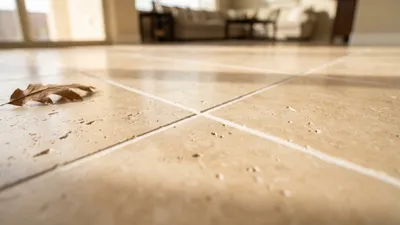
Three regional factors set Las Vegas grout on a faster decay curve than grout in almost any other U.S. market. Each one alone would be a problem. Together they compound, and they explain why the same grout that looks acceptable for a decade in San Diego or Atlanta needs professional restoration in eighteen months in Henderson or Summerlin.
The first is water hardness. Southern Nevada water averages 285 to 575 milligrams per liter of dissolved minerals (Southern Nevada Water Authority data). That is among the highest hardness levels in the country. Every time you mop a tile floor with tap water, you deposit a thin film of calcium and lime onto and into the grout. Over months, that film builds into a chalky veneer that no household cleaner removes.
The second is fine particulate dust. The Las Vegas desert produces an unusually fine, abrasive dust that is suspended in the air year-round and concentrated during wind events and monsoon haboobs in the summer. That dust settles into grout lines continuously. Unlike polished tile surfaces (which dust slides off), grout's textured cementitious surface holds onto every grain.
The third is sun and dryness. Las Vegas runs 294 sunny days a year at 2,001 feet of elevation. UV exposure breaks down topical sealers, especially the type applied during initial tile installation. Add to that an average relative humidity below 30 percent for most of the year, and grout becomes brittle. Brittle grout develops micro-cracks, and micro-cracks become highways for the dust and minerals listed above.
Why Grout Specifically
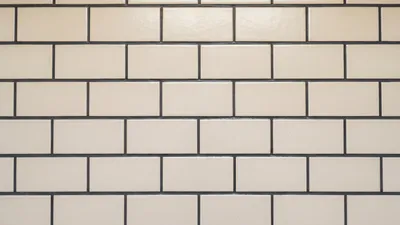
Grout is not stone. Grout is cement. The visible surface you see on a clean grout line is the smoothest face of a porous, sponge-like cementitious material. Under a microscope, every grout line is a network of micro-pockets connected by capillary channels. Those channels were designed to bond grout to tile during installation. After installation, they become the conduit through which dirty water, particulate, and dissolved minerals migrate beneath the surface.
This is the architectural reason your tile can look acceptable while your grout looks dingy. The tile face is non-porous (vitrified ceramic, glazed porcelain, sealed natural stone). Dust and minerals sit on the surface and wipe off. Grout is the opposite. Dust and minerals sink in. They get pushed deeper by every mop pass. Eventually the grout color you see is not the original color at all. It is a layered composite of cement plus years of trapped contaminants.
A new sealer applied at installation slows that migration for a year or two. After two to three years in Las Vegas conditions, that sealer is gone, and the grout begins absorbing whatever passes over it.
The Hidden Damage from Mopping
This is the part most Las Vegas homeowners do not know. Mopping a tile floor with a regular bucket-and-string mop does not clean the grout. It loads the grout with concentrated dirty water.
The mechanism is simple. A mop dipped into a bucket of clean water becomes a mop holding diluted dirty water within fifteen seconds. Each subsequent pass over the floor squeezes that diluted dirty water down into grout micro-pockets, where it sits and dries. The clean tile face wipes streak-free, which feels like progress. The grout, meanwhile, has just absorbed a fresh layer of mineralized contamination.
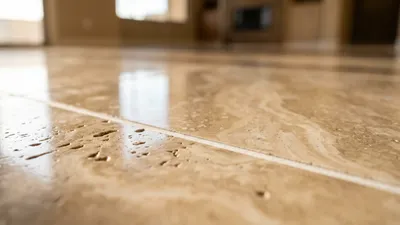
This is why a freshly mopped floor often looks darker in the grout lines after it dries. The water on the tile evaporates and leaves nothing behind. The water in the grout takes its dissolved minerals and trapped particulate with it as it dries, leaving everything behind in the porous structure of the grout.
Spray-mop systems and microfiber pads improve the situation modestly because they use less water. They do not solve it. The only cleaning method that genuinely removes contaminants from grout's micro-pockets rather than packing more in is high-pressure hot-water extraction, which is what a truck-mounted steam system does and what household equipment cannot do.
What 15 Years of Buildup Actually Looks Like
The single most common phrase Royal Surface Restore customers say after a tile and grout job is some version of "I cannot believe that was the original color." Reviewers use the phrase repeatedly: looks like it was installed yesterday, brand new, blew me away.
The reason for that reaction is that homeowners are calibrated to the slow, gradual decay of their floor. The change happens over thousands of mop passes across hundreds of weeks. There is no single moment of comparison. So the brain accepts the dingy grout color as the floor's actual color.
A meticulous tile and grout cleaning resets that calibration in a single visit. The grout returns to its construction-day color. The tile face returns to its showroom reflectivity. The contrast between the two is what produces the reaction. It is not that the floor is now clean. It is that the homeowner is now seeing what the floor looked like before fifteen years of Las Vegas water and dust did their work.
What Professional Cleaning Removes That You Cannot
Royal Surface Restore uses a commercial-grade truck-mounted steam system. The technical components matter because they explain why the result is different from anything achievable with a bucket, a brush, or a rented carpet shampooer.
The system delivers water heated above 200 degrees Fahrenheit. That temperature breaks the bond between cement and dissolved mineral deposits at the molecular level, something room-temperature water and household cleaners cannot do. Pressure is calibrated to the tile type, high enough to push contaminants out of the grout's capillary channels but controlled enough to leave the grout intact. An eco-friendly pH-balanced cleaning agent is applied in advance and engaged by the heat and pressure. Most importantly, dirty water is extracted simultaneously by a vacuum recovery system, which means contaminants leave the floor in a holding tank rather than being pushed deeper into the grout.
That last component is the part household equipment cannot replicate. Even rented professional-grade equipment from a hardware store almost always lacks dirty-water extraction. Without extraction, grout cleaning becomes grout repacking.
Your technician assesses the floor before any work begins and tells the homeowner what to expect. Most stains and most discoloration come out completely. The exceptions are typically deep-set rust spots, dye stains, or grout that has been resealed multiple times with low-quality topical sealer. In those cases, color sealing is the right next step.
The Color Sealing Question
Some Las Vegas grout cannot return to its original color through cleaning alone. Years of accumulated contamination, original sealer breakdown, or grout that was the wrong color from day one all create situations where deep cleaning produces a dramatic improvement but not a perfect result.
In those cases, grout color sealing is the answer. The process applies a pigmented sealer that bonds chemically with grout, restoring uniform color and waterproofing the surface against future dust and mineral migration. Color sealing also gives homeowners the option to change grout color entirely. Old white grout that has yellowed can become charcoal. Tan grout that no longer matches the redecorated room can become bone or warm gray. The change is permanent, the maintenance burden drops, and resale appeal goes up.
Color sealing costs more than cleaning alone. It is also more durable. A properly applied color seal in a Las Vegas home typically holds for ten to fifteen years, compared to a cleaning result that needs refreshing every twelve to twenty-four months.
How Often Las Vegas Grout Should Be Professionally Cleaned
The honest answer is that it depends on traffic, family size, pets, shoes, and how aggressively you mop with tap water. The typical Las Vegas pattern works out to once every twelve to eighteen months for primary living areas (kitchen, dining, entry, hallways), and once every two to three years for secondary areas (guest bath, laundry).
Households with small children, multiple dogs, or open floor plans with no shoe-removal habit tend to need cleaning more often. Households with shoes-off rules and pH-neutral mopping practice tend to need it less. Your technician gives a frank read on a household's specific schedule during the on-site assessment, since the team sees the same homes across multiple service intervals.
Comparing the cost of a professional cleaning every eighteen months ($375 to $850 for a typical Las Vegas main floor, depending on square footage) to the cost of replacing tile after years of buildup destroys it (ten to twenty thousand dollars or more), regular cleaning is the obvious choice.
Ready to Stop the Dirty-Grout Cycle?
If your grout has been carrying years of Las Vegas hard water and desert dust, restoration produces a result you will recognize from when the floor was new. Get a free on-site estimate from our team. Phone or text 702-577-7474, or use the contact form for a same-day callback.
For technical detail on the truck-mounted steam process, the full pricing table, and photos from completed projects in Summerlin, Henderson, and across the valley, visit the tile and grout cleaning service page.